SGEL Summer School
The Sustainable Global Economic Law (SGEL) Summer School provides a unique critical space for interdisciplinary conversations on law, political economy and sustainability. In a context of accelerating climate change and persistence of socio-economic inequalities based on gender, race, class and other identity markers, the Summer School offers a collaborative intellectual space around issues of economic law, ecological and human sustainabilities, connecting local and global contexts, and linking critical research to legal practice. This event is part of the Transformative Effects of Globalization in Law (TEGL) research project.
Event details from: SGEL Summer School
- Start date
- 11 June 2024
- End date
- 13 June 2024
- Time
- 10:00 – 16:00
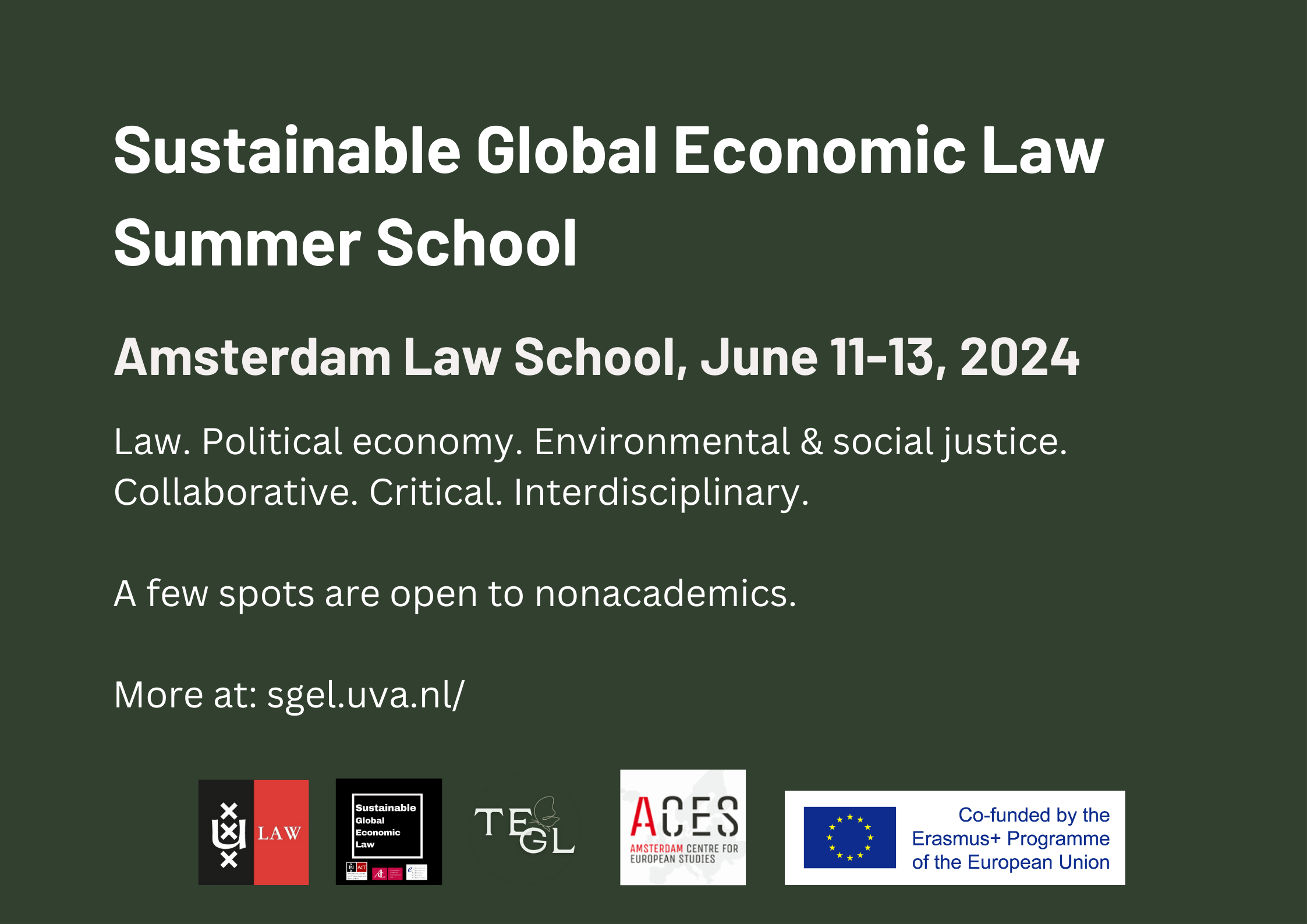
The Summer School provides a unique critical space for interdisciplinary conversations on legal institutions that structure contemporary forms of capitalism and on law’s role in creating and possibly addressing multiple overlapping ecological and social crises.
The school features thematic sessions, and sessions on critical research methods, writing workshops and a career development session on publishing.
For its fourth edition, the Summer School will focus on bridging critical legal conversation on law, political economy, sustainability and legal practice.
It will be designed for participants to work collaboratively on transformative legal reforms which pursue emancipatory goals by incorporating critical insights. These reforms question how law maintains and legitimizes the current power distribution.
This year we will focus in particular on the following themes:
- Care & social reproduction
- Sustainable global finance
- Law & technology
- Corporate power & multinationals’ accountability
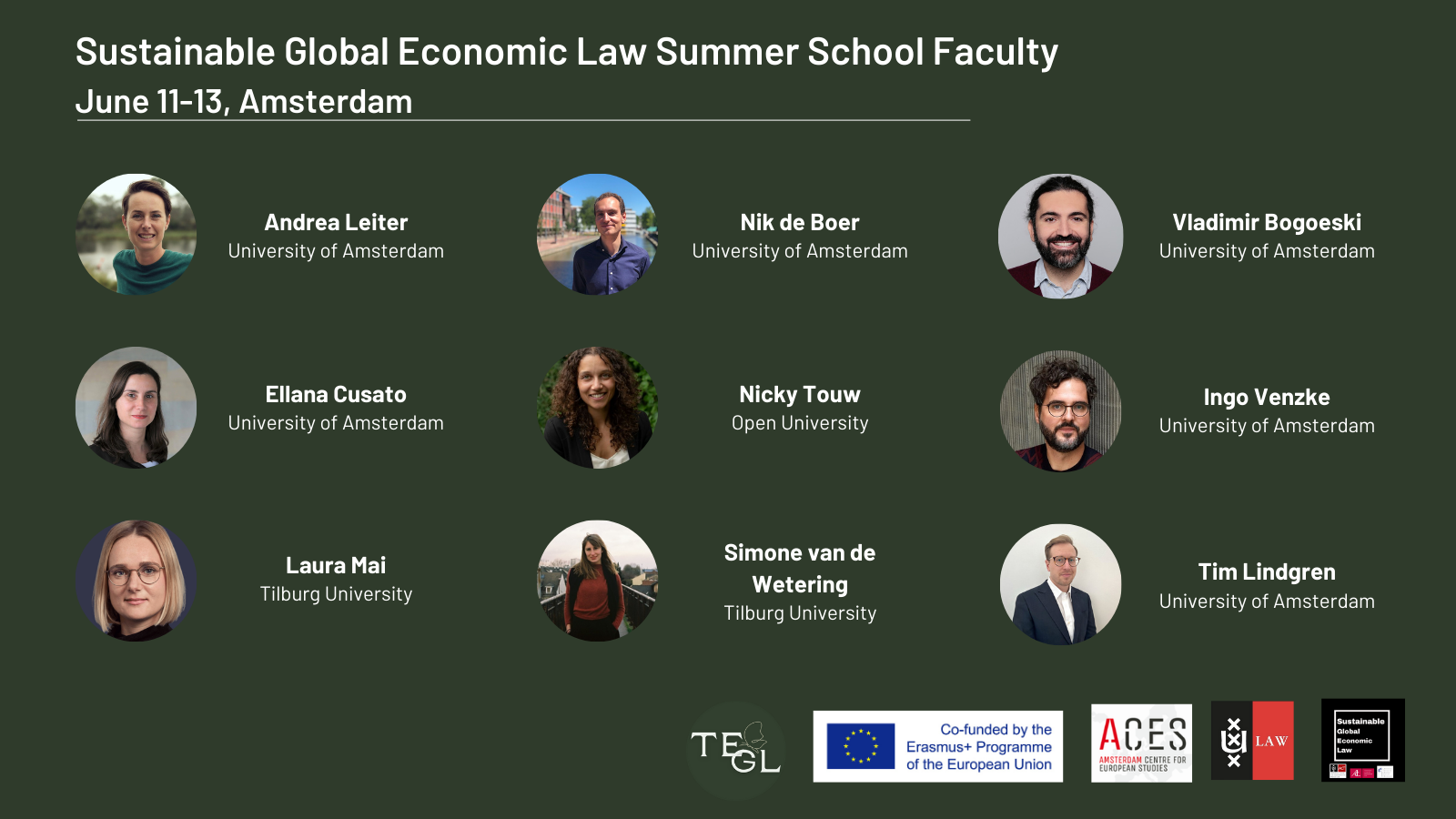
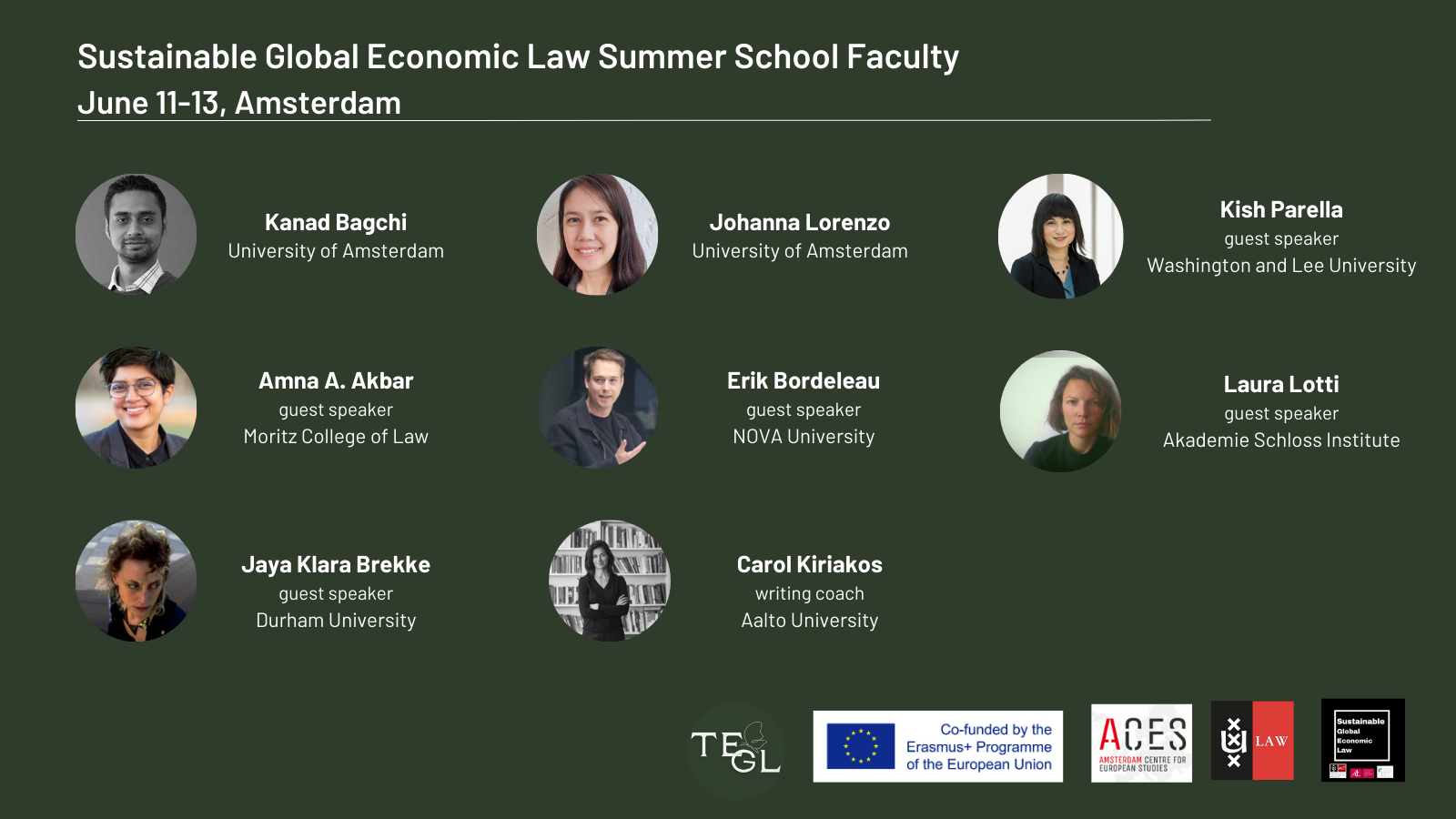
The summer school is organised by Ivana Isailović with the help of Tim Lindgren, Nicky Touw, Gustavo Becker and Zhonghua Du.

The Summer School is co-founded by the Transformative Effects of Globalization on Law research project, financed by the Dutch Ministry of Education. It is also co-funded by the Erasmus Plus Programme of the EU.